
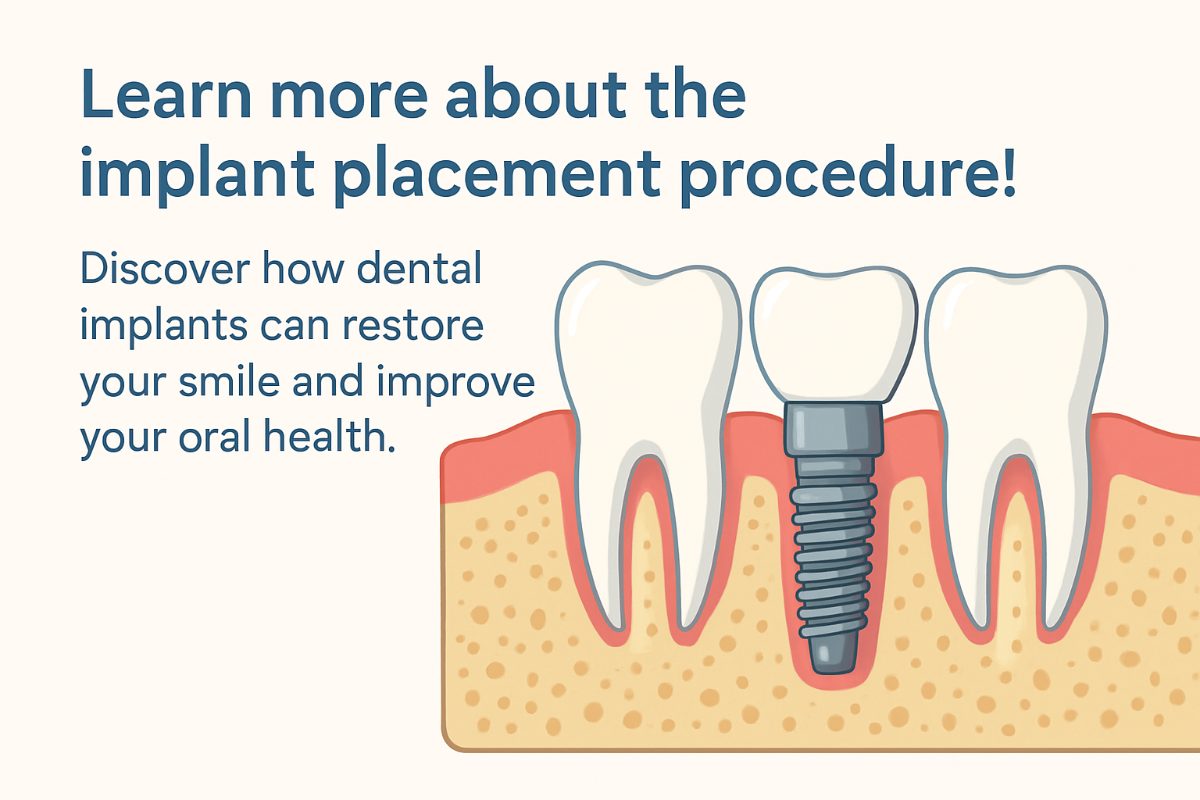
An implant placement procedure replaces a missing tooth root with a titanium post that holds a crown, bridge, or denture. People choose implants to chew better, speak clearly, and feel confident when they smile. Unlike removable dentures, implants act like natural teeth and can stop bone loss. If you’re considering long-term tooth replacement, this overview explains what an implant placement procedure involves, who qualifies, what to expect during treatment, and common aftercare.
What Is an Implant Placement Procedure?
An implant placement procedure uses a metal implant post placed into the jawbone to support a prosthetic tooth. The post (implant) fuses to bone, an abutment connects the post to the restoration, and a crown, bridge, or denture completes the tooth. Implants differ from bridges because they don’t rely on neighboring teeth for support, and they differ from removable dentures because they are fixed or securely attached and preserve jawbone over time.
Who Is a Good Candidate?
Oral health factors
Good candidates have healthy gums and enough jawbone to support an implant. If bone is thin, a bone graft can rebuild the site. Any active infection or untreated gum disease must be cleared before an implant placement procedure.
Medical and lifestyle factors
Chronic conditions like uncontrolled diabetes, certain medications, and heavy smoking can slow healing and raise risk of failure. Your provider will review your health history and may recommend medical clearance or lifestyle changes to improve success.
Age and expectations
Adults of most ages can get implants if their jaw growth is complete. Success depends on realistic goals: implants restore function and appearance but require time, multiple visits, and daily care. Discuss expected outcomes with your team.
What Happens During the Implant Placement Procedure?
Planning and imaging
Treatment begins with a consultation and 3D imaging like CBCT to map bone, nerves, and sinus anatomy. Guided surgery planning helps place implants precisely for long-term stability and ideal esthetics.
Surgical steps
On surgery day, local anesthesia is used and an incision exposes the bone. The implant post is placed into a prepared site, and sutures close the gum. Some cases use guided surgical guides for exact positioning. Same-day provisional restorations may be possible in select cases.
Healing and restoration
Osseointegration — the implant fusing to bone — usually takes a few months. After healing, an abutment is placed and the final crown, bridge, or denture is attached. In some practices, CEREC same-day crowns may speed final restoration when conditions allow.
Risks, Recovery, and Aftercare
Expect mild swelling, soreness, and a soft-food diet for a few days. Follow pain control, oral hygiene, and smoking-cessation instructions. Watch for signs of infection, persistent pain, or loosening — contact your dentist if these occur. Long-term success relies on good brushing, flossing, regular checkups, and using a night guard if you grind your teeth.
Alternatives, Timeline, and Cost Considerations
Alternatives include fixed bridges or removable dentures; implant-supported overdentures are a mid-ground for stability without individual implants for each tooth. Timeline from consult to final restoration often spans 3–6 months, longer if grafting is needed. Costs vary by number of implants, grafts, and technology; many practices offer financing or payment plans.
Why Choose Stuparich & Nouel Dental Associates for Implant Care
Stuparich & Nouel provide prosthodontist-led implant care with advanced training from the Misch Implant Institute and fellowship credentials. They use CBCT, Laser-Lok® and BioHorizons® implants, guided surgery, and CEREC® when appropriate to improve precision and outcomes for an implant placement procedure in Boston. To see if an implant placement procedure in Boston is right for you, schedule a consultation to discuss options and a personalized plan.