Dental implants are metal posts surgically placed into the jaw to replace missing tooth roots and support crowns or bridges.
Many patients ask, “How long does an implant tooth last?”
The honest answer is: it depends. Implant lifespan rests on medical factors (bone health and healing), technical choices (implant system and crown material), and daily care (oral hygiene and habits).
In this post, we will explore various aspects of longevity, including typical lifespans and the key factors that influence how long devices last. We will also discuss common issues to be aware of, provide tips for proper implant care, and highlight when you might need to consider replacing certain components.
Average Lifespan: How Long Does An Implant Tooth Last in Boston?
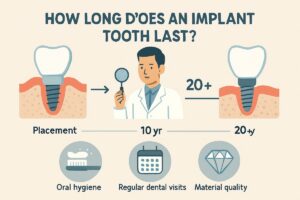
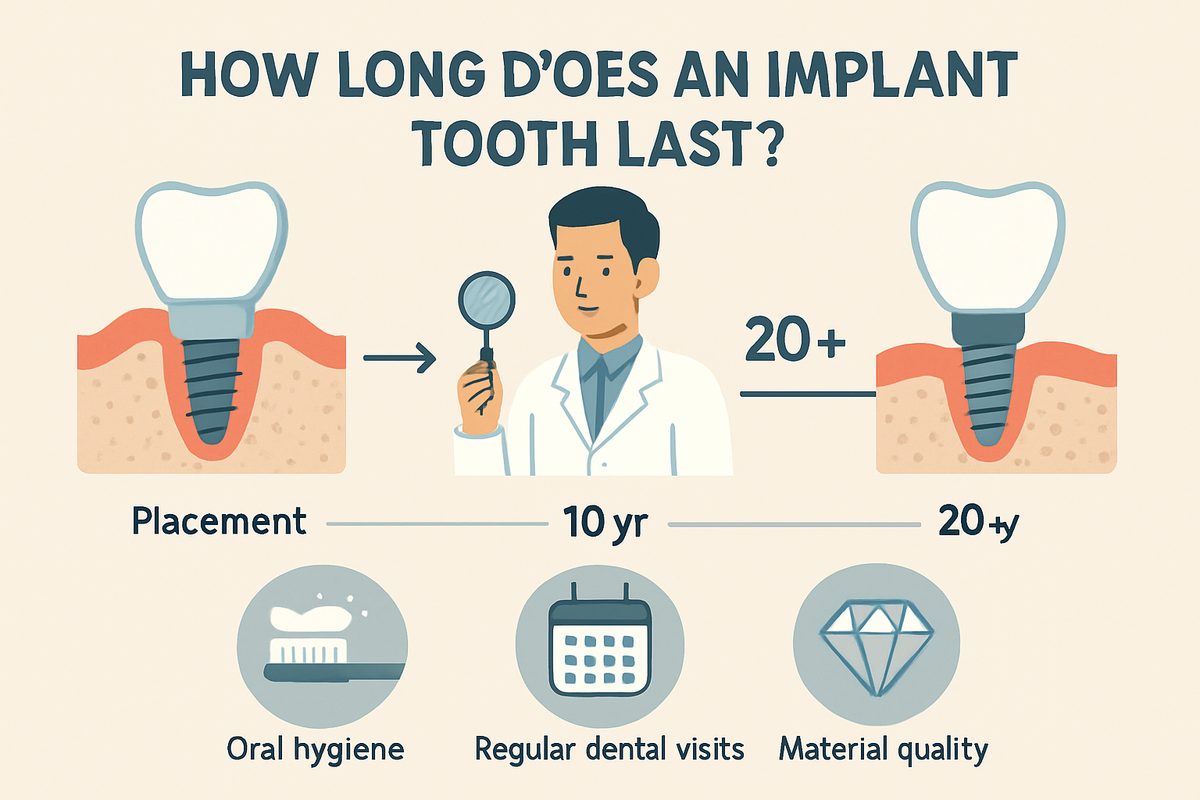
Most modern dental implants last a very long time. Studies report that implant fixtures (the titanium posts) often survive 10–30+ years and, in many cases, decades with proper care. The prosthetic tooth — the crown or bridge attached to the implant — usually needs replacement sooner, commonly every 8–15 years, depending on wear and material. When asking how long an implant tooth lasts, remember there are two pieces to consider: the implant fixture (long-term) and the visible crown (periodic maintenance).
Success vs. survival rates
“Survival” means the implant stays in the mouth and supports a restoration; “success” means it does so without pain, infection, bone loss, or functional problems. Long-term studies show high survival rates (often >90% at 10 years) for well-placed implants, but individual outcomes vary based on health and maintenance.
Main Factors That Determine Implant Longevity
Bone health and osseointegration
A healthy jawbone that fuses properly with the implant (osseointegration) is essential. Poor bone volume, untreated periodontal disease, or inadequate healing can lead to early failure. Sometimes bone grafts or staged treatment are needed to create a stable foundation.
Implant system and materials
Higher-quality implant systems and proven surface technologies improve predictability. Implant design, brand reputation, and proper abutment choice affect how well the implant integrates and resists complications over time.
Prosthetic design and crown material
Crowns made from durable materials (porcelain-fused-to-zirconia, full zirconia, or high-strength ceramics) and a precise fit reduce wear and breakage. Poor bite design or an ill-fitting restoration can overload the implant, shortening its lifespan.
Patient health and habits
Smoking, uncontrolled diabetes, heavy clenching or grinding (bruxism), and poor oral hygiene increase the risk of complications and implant loss. Healthy patients who maintain hygiene and address harmful habits usually see the best long-term outcomes.
Common Problems That Can Shorten Implant Life
Peri-implantitis and bone loss
Peri-implantitis is an infection of the tissues around an implant that leads to bone loss if not treated. Signs include bleeding when cleaning, gum recession, or increased pocket depths. Early detection and treatment are vital to save the implant.
Mechanical issues
Implant restorations may experience mechanical issues such as loose screws, worn or fractured crowns, and abutment wear. These are common and often repairable. Regular checks catch problems before they become severe.
Symptoms to watch for
Alert your dentist if you notice pain, mobility of the implant or crown, swelling, pus, or a sudden change in your bite. Early evaluation improves the chance of a simple fix rather than complex surgery.
How To Make Your Implant Tooth Last As Long As Possible
Daily home care
Brushing twice a day with a soft brush and using interdental brushes or floss designed for implants helps remove plaque. Avoid harsh scrubbing and use a non-abrasive toothpaste. Clean around abutments and under bridges carefully.
Professional maintenance
Plan regular dental visits for professional cleanings and x-rays. Many implant patients benefit from cleanings every 3–6 months at first, then tailored to their needs. Radiographs monitor bone levels and catch problems early.
Protective measures
If you grind your teeth, wear a custom nightguard. Avoid chewing ice or hard candies, and avoid using teeth as tools. Quitting smoking and controlling systemic conditions like diabetes markedly improve implant prognosis.
When Parts Need Replacing — What’s Normal
The titanium implant post itself often lasts decades. The crown or prosthetic tooth typically wears and needs replacement every 8–15 years, depending on the material and use. Routine wear, shade changes, or minor fractures usually call for a crown replacement, not a new implant.
Repair vs. full replacement
Many issues are repairable: a loose screw can be tightened, a crown can be re-cemented or remade, and minor soft-tissue problems can be managed. Full replacement of the implant post is only needed with severe bone loss, uncontrolled infection, or implant fracture.
Advanced Technology and Specialist Care That Improve Longevity
Specialist care and modern tech increase the odds of long-term success. Prosthodontists bring advanced training in planning and restoring complex cases.
Digital planning and guided surgery
CBCT imaging and computer-guided implant placement improve accuracy, minimizing surgical risk and optimizing implant position for long-term stability.
Implant choices and surface tech
Modern surface technologies and proven systems promote faster bone healing and better tissue attachment, helping implants remain stable for years.
Same-day restorations and durable crowns
CEREC and CAD/CAM-made crowns provide excellent fit and durable materials in fewer visits, which can improve immediate function and long-term outcomes.
Short FAQs
Q: How long does an implant tooth last if I smoke?
A: Smoking reduces success rates and increases the risk of bone loss and infection. Implants may fail sooner in smokers; quitting improves outcomes.
Q: Will my implant look natural forever?
A: The implant can look natural for many years, but crowns may need refreshing or replacement to maintain color and fit.
Q: How often should I see the dentist after implant placement?
A: Typical follow-up is frequent in the first year (1 week, 1 month, 3 months, 6 months), then maintenance every 3–12 months based on health and risk factors.
Final Takeaway and Next Steps
Many implants last decades when placed well and cared for properly; crowns typically need periodic replacement. If you’re asking how long an implant tooth lasts in Boston, the best outcomes come from good health, precise planning, proven implant systems, and regular maintenance. To get a personalized plan, schedule a consultation with a prosthodontist experienced in implant care to discuss options, technologies, and a maintenance schedule that maximizes your implant’s lifespan.