
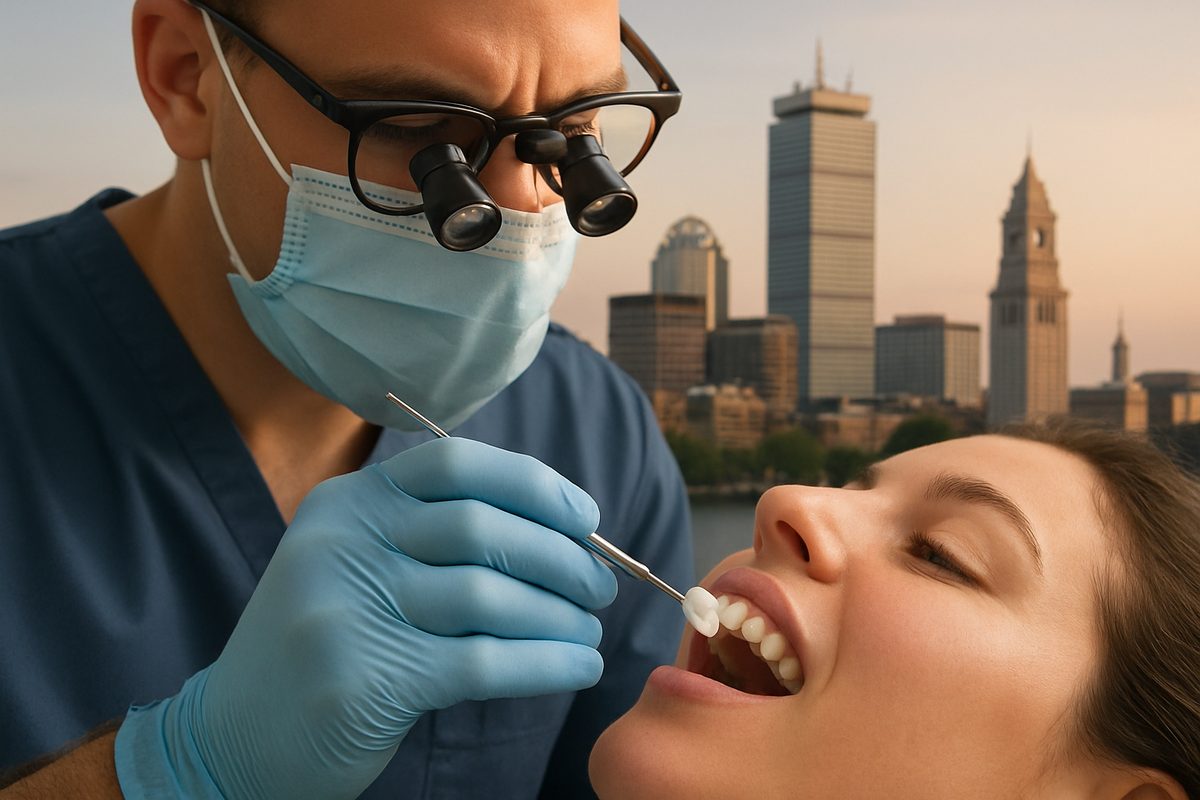
If you’re asking, “Are porcelain veneers worth it?” the short answer is often yes for people focused on a long-lasting cosmetic change.
Porcelain veneers can quickly transform color, shape, and symmetry with results that resist stains and look natural. This post will help you decide if porcelain veneers in Boston, MA, are the right choice by explaining how veneers work, benefits and risks, candidacy, cost and financing, aftercare, and how to pick the right provider.
What are porcelain veneers?
Porcelain veneers are thin ceramic shells bonded to the front of teeth to change their appearance. They cover chips, gaps, stains, and odd shapes. Porcelain differs from composite bonding because it’s stronger, more stain-resistant, and mimics natural tooth light-reflection better. Composite is cheaper and quicker, but usually doesn’t last as long or look as lifelike.
How porcelain veneers in Boston, MA, are placed
Consultation and digital planning
Your first visit includes an exam, photos, and a discussion of goals. Many offices use Digital Smile Design to show a preview of your new smile. This digital planning helps align expectations, test color and shape, and coordinate any needed gum or bite work before altering teeth.
Preparation and bonding
Most veneers require removing a thin layer of enamel so the shell sits flush. Impressions or digital scans are taken; some practices use CEREC same-day milling to create veneers in one visit. Final steps include trying on the veneers, adjusting fit and color, then cementing them with a strong dental adhesive.
Top benefits of porcelain veneers in Boston, MA
Veneers offer fast cosmetic improvement for color, shape, and symmetry. Porcelain resists staining from coffee, tea, and tobacco better than natural enamel. They can last a decade or more with good care, and the results are immediate compared with longer treatments like orthodontics plus whitening.
Common drawbacks and risks
Getting veneers is irreversible because enamel is removed during the procedure. Some patients experience temporary sensitivity to hot or cold. Veneers may chip or crack, and they eventually need replacement—often after 10–15 years, depending on wear. Upfront costs can be higher than for simpler cosmetic options.
Who is a good candidate for porcelain veneers?
Good candidates want cosmetic fixes for discolored, chipped, slightly crooked, or misshapen teeth and have healthy gums and teeth free of active decay. Veneers aren’t ideal for severe bite problems, untreated gum disease, or heavy teeth grinding unless those issues are addressed first.
Alternatives to porcelain veneers
Teeth whitening works for surface stains but won’t fix shape or gaps. Composite bonding can reshape teeth at a lower cost but won’t last as long. Orthodontics (like Invisalign®) corrects alignment without removing enamel. Crowns are better for teeth with large fillings or that have undergone root canal treatment. Each option fits different goals and budgets.
Cost and financing for porcelain veneers in Boston, MA
Porcelain veneers typically range from about $1,000 to $2,500 per tooth in the Boston area. Insurance usually won’t cover purely cosmetic veneers, though it may cover part of the treatment if teeth are structurally damaged. Common payment options include CareCredit, in-office financing, third‑party dental loans, and staggered payment plans to help spread costs.
How to choose the right provider for porcelain veneers in Boston, MA
Look for prosthodontic training or strong cosmetic dentistry experience, clear before-and-after photos, and reviews from real patients. Providers using Digital Smile Design or CEREC® technology can offer better previews and precise results. Ask about follow-up care and who performs any required preparatory or restorative work.
Why consider Stuparich & Nouel Dental Associates for veneers
Stuparich & Nouel Dental Associates is led by prosthodontists Drs. Mauro Stuparich and Alexandra Nouel, with decades of combined experience in complex esthetic and implant care. The practice offers Digital Smile Design, CEREC same-day restorations, and CBCT imaging—tools that support predictable, natural-looking veneer outcomes.
What to expect after getting porcelain veneers
Expect mild sensitivity for a few days, then normal function. Maintain routine dental hygiene and use nonabrasive toothpaste to protect veneers. Veneers don’t whiten, so professional whitening should be done before veneers are made if you want lighter adjacent teeth. Plan on touch-ups or replacement after about 10–15 years, depending on wear and care.
Quick decision checklist
– Cosmetic goal: Do you want color, shape, or symmetry changed permanently?
– Oral health: Are gums healthy and teeth free of decay?
– Budget: Can you afford $1,000+ per tooth or finance the treatment?
– Longevity: Are you ready for a long-term, mostly irreversible change? If you answered yes to most, porcelain veneers in Boston, MA, are likely worth considering.
Next steps and call to action
If you’re ready to explore veneers, schedule a consultation to review goals and see a digital preview. A Boston prosthodontist can assess your bite, oral health, and aesthetic needs to create a personalized plan. Contact a qualified prosthodontic practice in Boston, MA, to discuss porcelain veneers and determine whether they align with your smile goals.